Global sourcing is changing how manufacturers evaluate the Smart Light Switch. Buyers are no longer choosing only by price. They are examining safety, compatibility, software stability, and long-term supply reliability. A switch may look elegant in a product photograph, yet fail when installed in an older apartment with limited wall space.
George Yianni, former Head of Technology at Philips Hue, has emphasized, “The smart home should make life simpler, not more complicated.” This principle matters during international procurement. A reliable Smart Light Switch should support common protocols, such as Wi-Fi, Zigbee, or Matter. It should also match regional voltage, frequency, wiring systems, and certification requirements. These details are easy to overlook. They can become expensive later.
Experienced sourcing teams request samples before placing large orders. They test touch response, relay noise, heat buildup, app pairing, and manual operation. They also inspect factory quality records and confirm component traceability. Packaging deserves attention too. Damp storage can damage electronic parts before shipment. A clear warranty process helps, but it cannot replace proper testing.
The strongest advantage is flexibility. Global suppliers can offer different finishes, button layouts, and private-label options. However, customization may increase minimum order quantities and production time. That trade-off deserves honest review. Not every low-cost supplier provides consistent firmware updates or responsive technical support. Sometimes, a simpler model is safer.
Real value is measured after installation. A Smart Light Switch should work quietly, securely, and predictably across different homes. That standard makes global sourcing more demanding, but also more worthwhile.
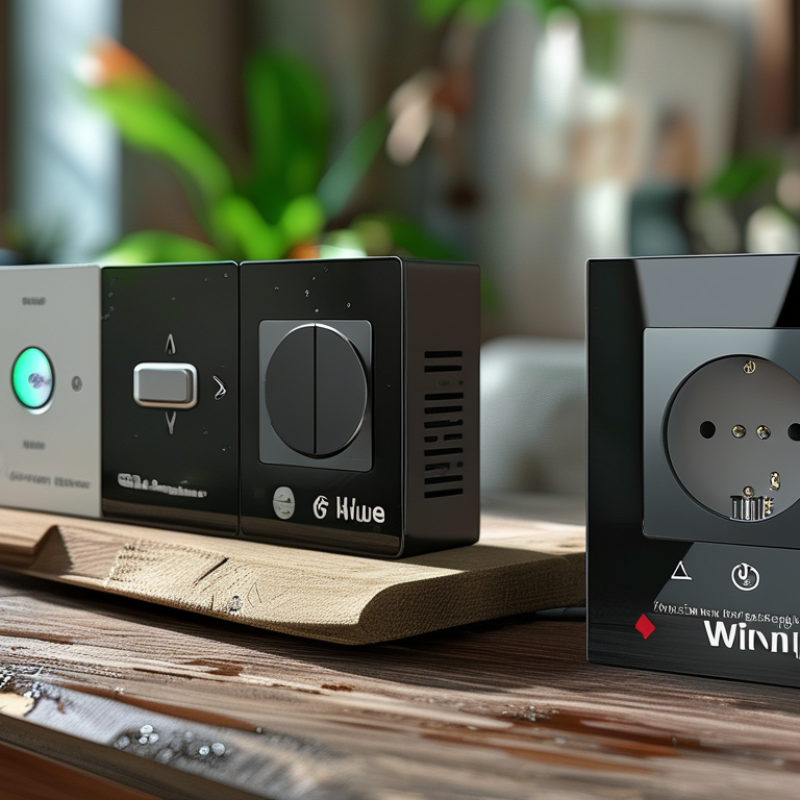
Smart light switches are wall-mounted controls that connect ordinary lighting to a digital network. They can use Wi-Fi, Bluetooth, or another communication method. Unlike a traditional switch, they may support schedules, remote control, voice commands, and motion-based automation. Some models also measure energy use.
The hardware usually includes a small relay, wireless module, and control processor. Its design must match the lamp load, wall box, voltage, and wiring system. A neutral wire may be necessary, although some switches support installations without one. These details matter during global sourcing. A product that works in one country may not suit another electrical system.
In product evaluations, I check wiring diagrams, load ratings, temperature tests, firmware updates, and installation instructions. Clear documents build trust. Qualified electricians should handle installation. I once focused too heavily on app functions and overlooked the switch’s physical depth. It did not fit comfortably in a crowded wall box. That mistake was avoidable.
The technology is not flawless. Wireless signals can weaken behind concrete walls. Cloud-dependent functions may respond slowly during network problems. For dependable sourcing, buyers should request test reports, sample units, warranty terms, and evidence of safety compliance for the target market. They should also test the switch with common lamps, including low-wattage LED bulbs. Practical trials often reveal more than a polished specification sheet.
A smart light switch combines a physical control with a small electronic control system. Inside, a relay opens or closes the circuit that powers the lamp. A wireless module receives commands from an app, hub, or voice assistant. Some models connect through Wi-Fi, while others use Zigbee, Thread, or Bluetooth.
The wiring matters.
Many switches need a neutral wire to maintain continuous power. Older buildings may not provide one, so compatibility must be checked before purchase. During practical product evaluations, installers also examine terminal strength, heat resistance, response time, and manual override performance. These details often matter more than a polished app.
After installation, users can set schedules, timers, scenes, or occupancy-based actions. A sensor may turn hallway lights on at night, then switch them off after movement stops. Some systems process commands locally, reducing delays when internet access fails. Others depend heavily on cloud services, which can create privacy, reliability, or service-continuity concerns.
Global sourcing requires careful technical verification. Buyers should review rated voltage, load type, communication standards, firmware support, and safety certifications for the target market. Interoperability can still be imperfect. A switch may pair easily but respond slowly with another device. Testing with real lamps is essential, especially with low-power LED loads that may flicker. A small pilot order often reveals problems that product specifications miss.
Why Choose Smart Light Switches for Global Sourcing?
Key Benefits for Global Sourcing
Smart light switches offer more than remote control. They can support energy management, scheduled lighting, and centralized monitoring across homes, hotels, and offices. In global sourcing projects, these functions may reduce operating costs and improve user convenience. However, savings depend on installation quality and actual usage patterns.
Procurement teams should check voltage ranges, wiring requirements, wireless standards, and regional certifications before comparing prices. A switch designed for one market may need a neutral wire, while another installation may not provide one. Ask for sample units and test them with local lamps, routers, and wall boxes. Small details matter.
I have seen attractive products fail because their mobile applications were unstable or their instructions were unclear. That experience makes technical documentation as important as the product itself. Buyers should review firmware update policies, data protection measures, warranty terms, and spare-part availability. Independent testing reports also help verify safety and performance claims.
Not every project needs advanced features. Some users prefer simple controls. A reliable basic model can outperform a complex one when training, maintenance, or internet access is limited. Global sourcing works better when suppliers provide consistent quality, transparent lead times, and communication in clear technical language. Mistakes still happen. Careful sampling reduces their cost.
Key benefits evaluated across common international procurement requirements
Smart light switches offer strong sourcing value because they combine energy-management capabilities, remote control, flexible installation, and compatibility with widely adopted wireless standards. The scores use a transparent five-point procurement evaluation model and do not represent any specific company or brand.
Why Choose Smart Light Switches for Global Sourcing?
Important Sourcing and Compliance Factors
Smart light switches can offer remote control, scheduling, energy monitoring, and easier property management. Yet global sourcing begins with compliance, not app features. Buyers should identify the destination markets before requesting quotations. Each market may require different electrical safety, radio, electromagnetic compatibility, and energy documentation. A product approved in one region may still fail another market’s requirements.
Ask suppliers for complete technical files, test reports, declarations, wiring diagrams, and firmware details. Check whether documents match the exact model, voltage range, plug configuration, and production site. Small differences matter. A revised circuit board can invalidate an older report. Factory audits should examine insulation, grounding, heat resistance, relay durability, and final inspection records. Samples deserve repeated testing, not just a quick installation.
Data protection also needs attention when switches connect to cloud services. Clarify where user data is stored, how accounts are secured, and how software updates are controlled. Require clear procedures for vulnerability reporting and product support. Packaging should include installation warnings and language-specific instructions. In practice, sourcing teams sometimes focus heavily on unit price and overlook replacement access or technical training. That approach is cheap only at the beginning. A useful improvement is a compliance checklist shared by purchasing, engineering, and legal reviewers. It may feel slow. It is still safer than correcting a shipment after arrival.
| Sourcing Dimension | Relevant Data or Requirement | Why It Matters in Global Sourcing | Buyer Verification Point |
|---|---|---|---|
| Input Voltage and Frequency | Common systems use approximately 100–240 V AC and 50/60 Hz, but the supported range must be confirmed for each model. | Electrical systems differ by destination market. Incorrect voltage or frequency specifications can create safety, reliability, and installation problems. | Request the electrical input range, frequency range, tolerance, wiring diagram, and test report for the exact product version. |
| Load Type Compatibility | Loads may include LED lamps, incandescent lamps, halogen lamps, fans, or other motor loads. Minimum and maximum loads vary by design. | LED drivers can produce inrush current and may require a neutral wire or a bypass component. A switch suitable for resistive loads may not be suitable for motors or dimmable LEDs. | Obtain separate load ratings for LED, resistive, capacitive, and inductive loads, plus minimum-load requirements. |
| Neutral-Wire Requirement | Some switches require line, neutral, and load conductors; other designs are intended for installations without a neutral conductor. | Building wiring practices differ among countries and properties. A neutral-required product may not be suitable for older installations. | Confirm terminal configuration, minimum load, standby current, bypass requirements, and compatibility with local wiring methods. |
| Wireless Technology | Products may use Wi-Fi, Bluetooth Low Energy, IEEE 802.15.4-based protocols, or a combination of technologies. Radio frequency bands are market-dependent. | Radio equipment must operate within permitted frequency bands and power limits in the destination country or region. | Check radio frequency, maximum conducted or radiated power, antenna type, modular approvals, security features, and regional firmware settings. |
| United States Electrical Compliance | Residential supply is commonly 120 V AC at 60 Hz. Applicable product safety requirements may involve recognized switch-control and household-control standards, depending on the design and use. | The product must match U.S. installation practices, enclosure requirements, wiring methods, and local authority requirements. | Verify the applicable safety certification, installation instructions, terminal markings, grounding provisions, and radio authorization before importation. |
| Canada Electrical Compliance | Residential supply is commonly 120 V AC at 60 Hz. Electrical products generally require certification to applicable Canadian safety standards or an accepted certification route. | Canadian requirements can differ from U.S. requirements even when nominal voltage is similar. | Confirm Canadian certification markings, bilingual labeling where required, installation instructions, and radio compliance documentation. |
| European Union Compliance | Residential supply is commonly 230 V AC at 50 Hz. Electrical and radio products may fall under the Low Voltage Directive, EMC Directive, Radio Equipment Directive, RoHS, and REACH obligations, depending on product configuration. | CE conformity requires the responsible economic operator to identify all applicable legislation and maintain supporting technical documentation. | Request the EU Declaration of Conformity, risk assessment, test reports, technical file summary, labeling artwork, and user instructions. |
| United Kingdom Compliance | The United Kingdom generally uses approximately 230 V AC at 50 Hz. Electrical and radio products may be subject to the Electrical Equipment Safety Regulations, EMC Regulations, Radio Equipment Regulations, and RoHS requirements. | Great Britain and Northern Ireland can have different conformity-marking routes and market rules. | Confirm the required conformity route for the sales territory, responsible person details, technical documentation, and labeling. |
| Australia and New Zealand Compliance | Residential supply is commonly approximately 230–240 V AC at 50 Hz. Electrical equipment and radio products may require the applicable national standards and regulatory registration or marking route. | Local requirements cover electrical safety, electromagnetic compatibility, radio operation, and supplier responsibilities. | Check the applicable switch-control and radio standards, supplier registration obligations, marking, and installation requirements. |
| Electrical Safety Testing | Typical evaluations include electric-shock protection, dielectric strength, insulation resistance, abnormal operation, temperature rise, endurance, and resistance to fire. | Smart switches combine mains voltage with electronic control circuits, creating additional safety and thermal considerations. | Use reports from an accredited laboratory and ensure the tested construction matches the production bill of materials. |
| Electromagnetic Compatibility | Testing commonly addresses conducted emissions, radiated emissions, electrostatic discharge, electrical fast transients, surges, and immunity performance. | Poor EMC performance can cause interference with nearby electronics or unreliable operation in electrically noisy environments. | Review the full EMC test plan, operating modes, connected-load conditions, and pass criteria for the final hardware and firmware. |
| Environmental and Chemical Compliance | Common requirements include restrictions on hazardous substances, chemical-substance communication, packaging materials, and waste electrical and electronic equipment. | Material restrictions and producer responsibilities can apply to the switch, packaging, cables, accessories, and electronic assemblies. | Request material declarations, supplier substance statements, packaging specifications, and market-specific recycling documentation. |
| Cybersecurity and Data Protection | Connected switches should support secure authentication, encrypted communication, controlled access, secure updates, vulnerability handling, and data minimization. | Cloud-connected products may process account, network, usage, or location-related data and may be subject to regional cybersecurity and privacy rules. | Assess the privacy policy, data flows, update process, vulnerability disclosure process, support period, and options for local control. |
| Enclosure and Installation Format | Wall-box depth, mounting-hole spacing, terminal layout, faceplate dimensions, and ingress protection vary by country and building type. | A switch can be electrically compliant but physically incompatible with local wall boxes, faceplates, or wiring space. | Confirm mechanical drawings, box compatibility, screw-terminal torque, conductor size range, and required installation clearance. |
| Operating Environment | Define the permitted ambient temperature, relative humidity, altitude, indoor or outdoor use, and pollution environment before selection. | Temperature, humidity, condensation, dust, and installation location affect insulation, electronics reliability, and enclosure safety. | Require an environmental specification and verify whether the stated IP rating applies to the complete installed product. |
| Quality Control and Traceability | Recommended controls include incoming inspection, in-process checks, dielectric testing, functional testing, wireless testing, aging tests, and batch traceability. | Traceability helps identify affected lots and supports corrective action when a field issue or compliance concern occurs. | Specify acceptance criteria, sampling level, defect classification, serial or lot coding, change-control procedures, and inspection records. |
| Firmware and Software Lifecycle | Define supported operating systems, application versions, communication protocols, update methods, backward compatibility, and minimum support duration. | A hardware-compliant switch can become commercially unsuitable if its application, cloud service, or firmware support is discontinued. | Include software version control, update responsibilities, end-of-support notice periods, and access to release documentation in the contract. |
| Packaging and Documentation | Packaging should protect the product during international transport and include required ratings, warnings, installation instructions, disposal information, and conformity markings. | Missing or inaccurate documentation can delay customs clearance, installation, retail sale, or regulatory review. | Approve artwork before production and check language, symbols, rated values, importer or responsible-person information, and document consistency. |
| Commercial Sourcing Terms | Evaluate minimum order quantity, tooling, sample approval, lead time, payment terms, spare parts, warranty period, logistics, and total landed cost. | The lowest unit price may not provide the lowest total cost after certification, testing, freight, returns, software support, and compliance updates. | Compare suppliers using a landed-cost model and include compliance ownership, engineering changes, recalls, warranty claims, and documentation obligations in the agreement. |
Note: Electrical, radio, cybersecurity, chemical, labeling, and installation requirements depend on the destination market and the exact product configuration. Requirements should be confirmed with the relevant authority or an accredited conformity-assessment professional before commercial shipment.
Choosing a global supplier requires more than comparing unit prices. Smart light switches connect to homes, networks, and electrical systems, so reliability matters. The International Energy Agency’s Global Status Report for Buildings and Construction 2023 states that buildings consume about 30% of global final energy. Efficient controls can support lower consumption, but poor hardware may create waste and service problems.
Evaluate suppliers through documented testing, factory capability, and communication quality. Request samples from different production batches, not only attractive prototypes. Check electrical safety reports, material declarations, firmware-update policies, and cybersecurity procedures. Confirm compatibility with local voltage, wireless standards, and installation requirements. A supplier should also explain minimum order quantities, tooling ownership, lead times, packaging, and replacement processes. In practice, a low quotation can become expensive after recalls, delays, or technical support gaps. That part is often underestimated.
It combines a physical button with a small electronic control system. A relay opens or closes the lamp’s power circuit. A wireless module receives commands from an app, hub, or voice-controlled system.
No, but many models require one for continuous power. Older buildings may lack this wire. Check the wall box before ordering.
Test terminal strength, heat resistance, response time, and manual override performance. Installers should also check relay durability. The physical parts matter.
Some models process commands locally. They may respond faster during an internet outage. Cloud-dependent models can face delays or service interruptions.
Users can set timers, schedules, scenes, and occupancy-based actions. For example, hallway lights can turn on at night. They can switch off after movement stops.
Product specifications may not reveal practical problems. Low-power LED lamps can flicker after installation. A real-lamp test exposes compatibility issues. Paper checks are not enough.
Request technical files, test reports, declarations, wiring diagrams, and firmware details. Confirm that every document matches the exact model and production site. Small revisions can create serious gaps.
Start with the destination market’s electrical, radio, and safety requirements. Inspect insulation, grounding, heat resistance, and final inspection records. A small pilot order can reveal hidden problems. Unit price alone is a weak guide.
Smart Light Switches are connected electrical controls that allow users to manage lighting through physical buttons, mobile applications, voice commands, schedules, or other smart-home systems. By combining wireless communication, automation, and energy monitoring, they offer greater convenience, flexible control, and potential energy savings compared with traditional switches. Their practical value makes them attractive for residential, commercial, and hospitality projects in different markets.
For global sourcing, buyers should evaluate product compatibility, voltage and frequency requirements, installation methods, connectivity standards, safety protection, software support, packaging, and long-term quality consistency. Compliance documentation, testing reports, labeling, and regional certification should also be verified before placing an order. The right supplier should provide stable manufacturing capacity, transparent communication, reliable quality control, customization options, clear lead times, and responsive after-sales support. A careful comparison of technical specifications, production experience, sample performance, and total procurement cost can help buyers select a dependable Smart Light Switch solution for international distribution.

NOVA New Energy