A Zigbee Hub can turn separate lights, sensors, switches, and plugs into one responsive home system. For global buyers, supplier choice affects more than unit price. Chipset availability, firmware support, certification records, and clear documentation can shape a product’s reliability long after the first shipment.
The broader market is expanding. IoT Analytics reported that connected IoT devices reached 16.6 billion worldwide in 2023 and projected 18.8 billion for 2024. That figure covers many technologies, not Zigbee alone, but it shows the scale of demand for connected products. The Connectivity Standards Alliance maintains Zigbee specifications and certification programs, giving buyers useful reference points when checking device compatibility. Still, a certification logo is not a substitute for testing the actual hub, app, and supported devices together.
Details matter. Ask suppliers for current test reports, supported Zigbee profiles, firmware update policies, and examples of interoperability testing. Request a sample and pair it with the sensors your customers already use. Then check range through real walls, not just an empty showroom. Small differences can become costly at scale.
A careful shortlist should weigh engineering support alongside price and production capacity. Suppliers may describe compatibility broadly; verify the exact models and firmware versions. This takes time. It is not glamorous, and it can still miss a field issue. But for global buyers, disciplined supplier checks are a practical starting point for sourcing a dependable Zigbee Hub.
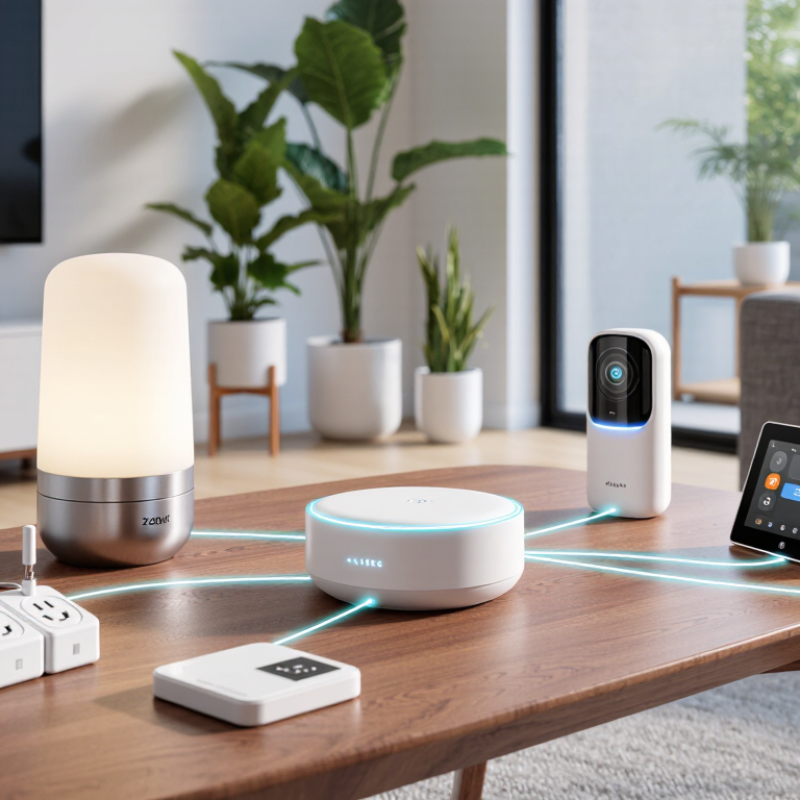
A Zigbee hub is the control center for smart home devices using the Zigbee wireless protocol. It receives signals from sensors, switches, locks, and lamps, then manages their communication. The hub usually connects to a router through Ethernet or Wi-Fi. Users control linked devices through a mobile app or local automation system. It is not magic.
Zigbee devices can form a mesh network. Mains-powered devices, such as wall switches, often repeat signals for battery-powered sensors. This structure can improve coverage across rooms and reduce pressure on one wireless connection. During supplier evaluation, global buyers should check supported frequencies, device profiles, firmware update methods, and local control options. These details often matter more than a low unit price.
In practical testing, pairing should be completed in a real apartment or small office, not only on a workbench. Thick walls, metal cabinets, and crowded wireless channels may weaken performance. A reliable hub should reconnect after a power interruption and report device status accurately. Security also deserves careful review, including encrypted communication and controlled access to user accounts. Compatibility can still be imperfect. Different manufacturers may interpret the same Zigbee profile differently. Buyers should request sample units, test common devices, and confirm technical support before placing larger orders. Suppliers in China can provide useful customization, but clear documentation and repeatable quality checks remain essential.
Choosing China-based Zigbee hub suppliers requires more than comparing unit prices. A reliable supplier should explain chipset options, supported profiles, gateway capacity, and firmware update methods clearly. Ask for sample units before discussing large orders. Test pairing, signal stability, recovery after power loss, and response time in a real room. A supplier with practical engineering experience will provide logs, wiring diagrams, and troubleshooting steps instead of vague promises.
Request recent test reports for radio performance, electrical safety, and wireless compliance in your target markets. Verify whether the documents match the exact hardware version. Check factory quality procedures, production traceability, inspection records, and warranty handling. Clear English documentation also matters. It reduces mistakes during installation and support. Security deserves close attention: ask about encrypted communication, secure onboarding, password policies, and controlled firmware access. Do not assume every “secure” claim has been independently verified.
Tips: Order two or three samples from different batches. Compare their performance over several days. Ask how firmware changes are approved and rolled back. Confirm minimum order quantities, lead times, spare-part access, and response targets in writing. A factory visit or live video audit can reveal useful details, such as calibration tools and final inspection routines. My own evaluation would include a weakness review: some suppliers may pass a short demonstration but struggle with long-term interoperability. That gap is easy to miss.
For global buyers, a Zigbee hub supplier should offer more than a working sample. The critical capability is dependable interoperability across sensors, switches, gateways, and cloud platforms. Ask for protocol test reports, supported device profiles, and clear firmware version records. A supplier with practical engineering experience can explain pairing failures, network congestion, and recovery after power loss. Vague answers deserve caution.
Security also requires detailed evidence. Review secure boot options, encrypted communication, access control, and vulnerability response procedures. Regional certifications matter, but certification alone does not prove product quality. Request production inspection records, aging-test results, and failure-rate data. Small details matter. For example, can the hub reconnect after a twelve-hour outage? Can installers update firmware without opening the enclosure?
Supply capability is equally important for international projects. Check component traceability, factory capacity, packaging standards, and backup production plans. Reliable suppliers provide API documentation, sample code, remote debugging, and defined support times. Customization should include realistic limits, not promises made during a sales call. A polished demonstration can mislead. I have seen successful prototypes fail during large deployments because testing used only three devices. Buyers should repeat tests in crowded wireless environments and request pilot units before committing. Even careful evaluations can miss edge cases, so transparent communication after delivery remains essential.
| Capability | What Global Buyers Should Verify | Why It Matters | Useful Evidence to Request |
|---|---|---|---|
| Zigbee compatibility | Supported Zigbee version, device profiles, coordinator behavior, and interoperability with the buyer’s intended ecosystem. | A hub may not work with every Zigbee device, even when both products use Zigbee. | Compatibility matrix, supported-device list, and results from tests with representative third-party devices. |
| Radio performance | Antenna design, operating band, receiver sensitivity, channel configuration, and coexistence testing with Wi-Fi. | Range and reliability depend on the device, placement, building materials, interference, and network layout. | Radio test reports, antenna details, and performance results from realistic deployment scenarios. |
| Connectivity options | Ethernet or Wi-Fi backhaul, supported Wi-Fi bands, network setup, and behavior during connection loss. | Backhaul requirements affect installation flexibility and continued access to cloud-connected functions. | Network specifications, setup instructions, and recovery or reconnection test procedures. |
| Local operation and cloud dependency | Which automations run locally, which require internet access, and how the hub behaves during an outage. | Offline functionality can be important for reliability, privacy, and time-sensitive automation. | A documented feature list for offline use and demonstration of common automations without internet access. |
| Security and updates | Secure onboarding, encrypted communications, access controls, vulnerability handling, and software-update policy. | A connected hub can affect the security and privacy of the broader smart-home network. | Security documentation, update support period, release process, and vulnerability disclosure contact. |
| Regional compliance | Applicable radio, electrical safety, electromagnetic compatibility, and environmental requirements for each destination market. | Requirements vary by market and product configuration; conformity must be assessed for the exact model being sold. | Current test reports and certificates applicable to the target markets and shipped hardware version. |
| Firmware and platform integration | API availability, integration options, firmware customization, documentation, and version-control practices. | Integration scope determines how easily the hub fits a buyer’s app, service, or automation platform. | API documentation, development support terms, firmware change log, and integration test plan. |
| Manufacturing and quality control | Production capacity, component traceability, inspection stages, change management, and batch consistency. | Consistent production helps reduce field failures and unexpected differences between sample and mass-production units. | Quality-system documentation, sample inspection records, traceability process, and production change notifications. |
| Customization and packaging | Available enclosure, label, language, packaging, power-adapter, and software customization options, including minimum order quantities. | Clear customization boundaries help buyers plan localization, compliance, and launch costs. | Written customization options, sample approval process, tooling fees, and minimum order quantities. |
| Delivery and after-sales support | Lead-time assumptions, spare-parts availability, warranty terms, response times, and escalation procedures. | Reliable delivery and support are essential for managing launches, returns, and issues across multiple regions. | Written service-level terms, warranty policy, sample lead-time schedule, and support workflow. |
Note: Capabilities and compliance status vary by product model and configuration. Buyers should verify claims and documentation for the exact hub intended for purchase.
For global buyers, a Chinese Zigbee hub supplier should prove more than factory capacity. IoT Analytics reported about 16.6 billion active connected IoT devices in 2023, increasing pressure on reliable gateways. Request the exact chipset, firmware version, supported Zigbee profile, and production test procedure. The Connectivity Standards Alliance reports more than 4,000 certified Zigbee products, but certification does not guarantee every device will work smoothly together.
Ask for a current certification record, not a screenshot. Check radio testing under the destination market’s rules, including FCC Part 15, RED, RoHS, and applicable electrical safety requirements. Review laboratory reports, declarations of conformity, factory inspection records, and traceable serial-number controls.
Paperwork is not proof. Select random production samples and test joining, rejoining, OTA updates, encryption, factory reset, and recovery after power loss. Measure range through concrete walls, interference on crowded 2.4 GHz channels, and network performance with many devices connected.
Compatibility testing should use the buyer’s actual sensors, switches, routers, and cloud interface. A supplier may demonstrate ten devices successfully, while the same hub fails during a 100-device stress test. This is an easy gap to miss. Require a written compatibility matrix and define failure limits before payment.
Suppliers should also disclose firmware-change procedures, vulnerability reporting channels, and support response times. Insist on a pilot batch before mass production, because one successful demonstration can hide inconsistent assembly quality.
When global buyers compare Zigbee hub suppliers, the lowest unit price rarely tells the full story. A serious quote should separate the hub, power adapter, packaging, certifications, sample fees, and tooling charges. Ask whether pricing is based on a fixed quantity or a flexible forecast. Otherwise, the final invoice may change after approval.
Request the same specifications from every supplier. Compare wireless range, supported protocols, memory, firmware update methods, and operating temperature. A sample test should run for several days, not just an afternoon. Check pairing stability through walls and recovery after power loss. No comparison is perfect. I once focused too heavily on hardware and overlooked weak mobile-app documentation.
Logistics can quietly affect profit. Confirm production lead time, inspection timing, carton dimensions, and shipment terms in writing. A supplier with nearby consolidation options may reduce delays, even with a slightly higher quote. Ask for photos of packed cartons and a sample shipping label. Small details matter. Calculate customs duties, storage fees, insurance, and replacement shipments before choosing.
After-sales support needs measurable promises. Confirm response hours, firmware maintenance, spare-part availability, and the process for defective units. Request an escalation contact for urgent failures. A reliable supplier should provide test reports and traceable batch information. Still, written promises may not reflect daily performance. A paid pilot order can reveal response speed, troubleshooting skill, and whether support continues after payment.
Ask for the chipset, supported device profiles, gateway capacity, and firmware update process. Request sample units before discussing a large order. Vague answers are a warning.
Pair them with your sensors and switches in a real room. Test through concrete walls and on crowded wireless channels. Check reconnection after a power outage.
Use the actual devices, routers, and software planned for your project. Request a written compatibility list and test more than a handful of devices. Small tests can mislead.
Request recent radio and electrical test reports for the exact hardware version. Review inspection records, production traceability, and failure-rate data. Paperwork is not proof.
Ask how communication is encrypted, devices are securely added, and passwords are managed. Check who can approve firmware updates and how vulnerabilities are reported. Claims need evidence.
Compare two or three samples, preferably from different production batches. Ask about aging tests, final inspections, and serial-number tracking. I might still miss an assembly issue.
Get minimum order quantities, lead times, spare-part access, and support response times in writing. Request a pilot batch before mass production. Test it anyway.
Ask for clear English instructions, API documentation, sample code, and remote debugging support. Confirm realistic customization limits and firmware rollback procedures. Promises can sound better than delivery.
Choosing the right Zigbee Hub supplier in China requires more than comparing product prices. A Zigbee Hub acts as a central gateway that connects compatible smart devices, such as sensors, switches, and lighting products, to a unified control system. Global buyers should evaluate suppliers based on technical expertise, manufacturing capacity, customization options, communication efficiency, and experience with international orders. It is also important to confirm whether the supplier can support the required Zigbee profiles, wireless standards, app or platform integration, and device compatibility.
Before placing an order, buyers should request samples, test connectivity and stability, and review quality-control procedures, certifications, documentation, and production consistency. Quotes should be compared by considering unit cost, minimum order quantity, tooling, packaging, shipping terms, delivery schedules, and payment conditions. Reliable after-sales support, firmware assistance, replacement policies, and clear responses to technical issues can significantly reduce long-term risks. A careful evaluation process helps global buyers select a dependable supplier and build a stable, scalable smart-home product supply chain.

NOVA New Energy