Top Smart Bulb Manufacturers for Global Buyers

Time:2026-10-09 Author:Sophia
0%

Choosing a Smart Bulb manufacturer requires more than comparing online prices. Global buyers need dependable products, stable supply, and clear technical documentation. A bright sample may impress during testing, yet fail after months of daily use. This guide examines leading manufacturers through practical purchasing criteria. These include product quality, production experience, certification readiness, software compatibility, and after-sales support.

Real performance often appears in small details. A reliable bulb should deliver consistent brightness, accurate color rendering, and smooth dimming. It should also connect easily with common platforms, including Wi-Fi, Bluetooth, Zigbee, or Matter ecosystems. Factory audits, sample testing, and warranty terms can reveal more than polished marketing images. Buyers should request test reports, batch information, and packaging specifications before placing large orders. Those steps reduce surprises during international shipping and installation.

No shortlist is flawless. Market conditions change. A manufacturer with excellent hardware may offer weak application support. Another may provide competitive pricing but limited customization. Product availability can also shift with component shortages, regional standards, or changing consumer demand. Therefore, this overview balances published information with practical buyer concerns. It does not treat every supplier as equally suitable. Instead, it highlights manufacturers worth further evaluation, especially for distributors, retailers, lighting contractors, and private-label brands. Careful verification remains essential, because a successful sample does not guarantee consistent production. That uncomfortable gap deserves attention.
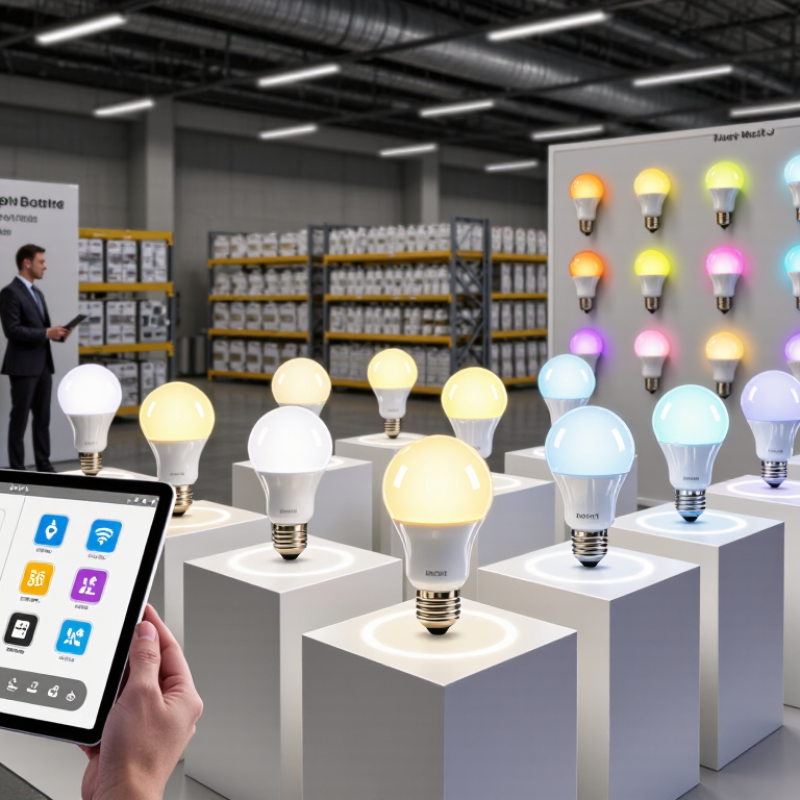
Top Smart Bulb Manufacturers for Global Buyers

What Are Smart Bulbs and How Do They Work?

A smart bulb is an LED lamp with a small communication system inside. It can change brightness, color temperature, or color through an app, voice command, or automation. Unlike a traditional bulb, it contains a control chip and wireless radio. That radio may use Wi-Fi, Bluetooth, Zigbee, or Thread.

The bulb receives instructions from a phone, hub, or compatible control system. A Wi-Fi model connects directly to the home router, while some Zigbee and Thread models need a separate hub. Bluetooth bulbs usually work nearby, but their range can be limited by walls. In practical installations, pairing often takes less than five minutes. Sometimes, it does not.

When selecting bulbs for different markets, check voltage, socket type, wireless frequency, and electrical certifications. A bulb designed for one region may not suit another outlet or power system. The packaging should state its rated voltage and operating temperature clearly. Brightness is measured in lumens, not watts. Color temperature, such as 2700K for warm white, affects comfort in bedrooms and living rooms.

Smart features depend on more than the bulb itself. A weak router can cause delays, and cloud-based controls may fail during an internet outage. Local control is often more reliable, but it may require compatible equipment. Energy savings are possible, though frequent color effects and standby power reduce them. The technology is useful, but not flawless.

Key Criteria for Evaluating Smart Bulb Manufacturers

Top Smart Bulb Manufacturers for Global Buyers

Global buyers should evaluate smart bulb manufacturers beyond price and glossy product photos. Experience starts with real operating conditions: voltage ranges, socket standards, heat, humidity, and unstable Wi-Fi. Ask for samples and test them in actual rooms. Check brightness consistency, color accuracy, startup time, and heat after eight hours. A bulb that performs well on a showroom shelf may behave differently in a warehouse or hotel.

Technical credibility matters. Review datasheets, firmware update policies, app compatibility, and encryption practices. Request independent test reports for electrical safety, radio performance, and energy claims. Verify whether certificates match the exact model, not a similar series. Manufacturers should explain failure rates, warranty limits, spare procedures, and software support periods in plain language. Vague answers are useful evidence. They show where risk may be hidden.

Supply reliability also needs measurable proof. Compare production capacity, inspection checkpoints, packaging tests, lead times, and minimum order quantities. Ask for a pre-shipment inspection sample, carton photographs, and a written change-notification process. Communication during a delayed order reveals more than a perfect sales presentation. I would also test support at night, when a lighting fault is inconvenient. One weakness remains easy to miss: long-term app support. A cheap bulb can become expensive when its cloud service changes or disappears.

Key Criteria for Evaluating Smart Bulb Manufacturers

Recommended procurement weighting for global buyers. The model prioritizes compliance, interoperability, reliability, supply capability, and total product value.

Compliance and interoperability receive the highest weights because global buyers need products that meet regional requirements and work reliably across major smart-home ecosystems. Supply capacity, lead time, energy efficiency, warranty support, and customization complete the evaluation framework.

Leading Smart Bulb Manufacturers for Global Buyers

Leading smart bulb manufacturers for global buyers combine practical engineering with dependable production control. They design bulbs for common sockets, stable wireless pairing, and daily use in homes, hotels, and offices. Experienced teams test dimming performance, heat levels, power recovery, and connection strength before shipment.

Ask manufacturers for recent test reports, factory photographs, and sample units from current production. A useful sample should pair quickly, respond smoothly, and remain cool after several hours.

Check whether the supplier supports regional voltage, wireless standards, plug requirements, and packaging rules. Compliance matters.

Production consistency is equally important. Buyers should review LED color accuracy, lumen output, app stability, and failure rates across multiple batches. A professional manufacturer can explain its quality checks without vague promises.

It should also provide traceable materials and clear warranty procedures. Small details count.

No supplier is perfect. A shipment may show slight color variation, or an app update may cause delays. These weaknesses deserve honest discussion before a large order.

Manufacturers with strong communication usually document corrective actions and prevent repeated problems. Global buyers should compare samples, factory capacity, lead times, and after-sales support rather than choosing by price alone. Testing takes time. It can prevent costly returns.

Product, Certification, and Connectivity Comparisons

Global smart-bulb buyers should compare measurable output, certification scope, and connection behavior. Product sheets often highlight lumens, yet omit color consistency and standby consumption. The U.S. Department of Energy says LEDs use at least 75% less energy and last up to 25 times longer than incandescent lamps. That benchmark is useful, but incomplete. Check efficacy, CRI, beam angle, dimming range, and rated cycles. A 1,100-lumen bulb can still disappoint when its diffuser creates glare. Small details matter.

Certification should match destination markets, not merely show a familiar logo. Request electrical-safety, EMC, radio, and chemical-compliance documentation. Common references include IEC 62560 for self-ballasted LED lamps, IEC 61347 for controlgear, and regional requirements such as FCC or CE marking. These documents support diligence, but they do not prove firmware quality or long-term thermal stability. Ask for test-lab identity, report dates, model numbers, and critical-component changes. Certificates can age.

Connectivity comparisons deserve a real installation test. Wi-Fi models offer direct network access, while Thread-based products need a compatible border router. Bluetooth often simplifies commissioning, but range and phone dependence can frustrate installers. The Bluetooth SIG 2024 Market Update forecasts 5.4 billion Bluetooth device shipments in 2024 and 7.0 billion by 2028. Matter 1.4 strengthens multi-ecosystem interoperability, yet implementation quality still varies. Test pairing, local control, outage recovery, latency, and firmware updates. Concrete walls expose weaknesses quickly. A careful scorecard beats polished packaging.

How to Select the Right Manufacturer for Your Market

Top Smart Bulb Manufacturers for Global Buyers

Selecting a smart bulb manufacturer starts with your market, not a product catalogue. Check socket standards, voltage, wireless protocols, and language requirements before requesting samples. A bulb designed for one region may flicker, overheat, or fit poorly elsewhere. Ask the manufacturer for test reports, safety certifications, and documented quality procedures. Verify each document with the issuing laboratory when possible. Trust, but verify.

Request samples from at least three manufacturers. Test brightness, color accuracy, connection stability, and heat after eight hours of use. Examine the packaging too. Weak cartons can create costly damage during long-distance shipping. Discuss minimum order quantities, tooling fees, firmware updates, and replacement policies in writing. A reliable supplier should explain production timelines clearly and identify the person handling technical support. Vague answers deserve attention.

Factory audits can reveal more than polished presentations. Review incoming material checks, aging tests, calibration records, and final inspections. I once underestimated firmware support, and a small update issue delayed a regional launch. That mistake still matters. No audit is perfect. Leave room for independent testing and unexpected returns. Consider local privacy expectations, app availability, data handling, and repair options before signing a contract. The cheapest quotation may become expensive when support, compliance, and inconsistent quality enter the picture.

FAQS

What should global buyers test before choosing a smart bulb manufacturer?

Request current samples and test them in real rooms. Check brightness, color accuracy, startup time, and heat after eight hours.

Why do operating conditions matter during evaluation?

Voltage, socket type, humidity, heat, and unstable Wi-Fi can change performance. A showroom test is not enough.

Which technical documents should buyers request?

Ask for datasheets, firmware policies, app compatibility details, encryption practices, and independent safety reports. Verify every model number.

How can buyers evaluate certification properly?

Match certificates with the exact bulb model and destination market. Check report dates, test laboratories, and critical-component changes.

What connectivity tests reveal real weaknesses?

Test pairing, local control, outage recovery, response time, and firmware updates. Concrete walls expose weak connections quickly.

How should buyers compare smart bulb performance?

Compare lumen output, efficacy, CRI, beam angle, dimming range, standby use, and rated cycles. Brightness alone can mislead.

What production information should a manufacturer provide?

Review capacity, inspection points, packaging tests, lead times, minimum orders, and failure rates. Ask for carton photographs and inspection samples.

How important is long-term software support?

It is very important. A low-cost bulb becomes costly when cloud services change or disappear.

What signs suggest hidden supplier risk?

Vague answers about warranties, repairs, software support, or compliance deserve caution. Communication during delays tells a lot.

Is any manufacturer completely risk-free?

No. Slight color variation or app delays may still happen. Honest suppliers document corrections and prevent repeated problems.

Conclusion

Smart Bulb technology combines energy-efficient LED lighting with wireless connectivity, allowing users to control brightness, color temperature, colors, schedules, and scenes through mobile apps, voice assistants, or smart home platforms. For global buyers, selecting a reliable manufacturer requires more than comparing prices. Important evaluation criteria include product quality, lighting performance, software stability, production capacity, customization options, warranty support, and supply-chain reliability.

A suitable manufacturer should also provide clear certification documentation, such as safety, electromagnetic compatibility, and market-specific compliance approvals. Buyers should compare connectivity options, including Wi-Fi, Bluetooth, Zigbee, or other protocols, based on local infrastructure and user expectations. The right choice depends on the target market, application, retail positioning, expected order volume, and after-sales requirements. By reviewing product specifications, certifications, connectivity compatibility, and long-term cooperation capabilities, buyers can identify a manufacturer that offers dependable performance, efficient procurement, and sustainable growth in the competitive smart lighting market.


Sophia

Sophia

Sophia is a dedicated marketing professional with an exceptional depth of knowledge about her company's products and services. With a keen understanding of market trends and customer needs, she crafts insightful blog posts that not only inform but also engage readers, enriching the company’s online......