Choosing a 12V Inverter in 2026 requires more than comparing wattage and price. The right model must match your battery, appliances, wiring, and daily operating habits. A compact inverter may run a laptop smoothly, yet fail when a refrigerator compressor starts. That brief surge matters. So does heat.
Nigel Calder, a respected marine electrical systems author, offers a useful warning: “The battery is the heart of the system.” His point remains practical. A powerful inverter cannot compensate for a weak battery, undersized cables, or poor connections. Before choosing, record each appliance’s running watts and starting demand. Add a sensible safety margin. Do not trust a single marketing number.
In 2026, buyers should examine pure sine wave output, continuous power, surge capacity, idle consumption, cooling design, and protection features. Lithium batteries may deliver strong performance, but their voltage behavior differs from lead-acid systems. Cable length also changes the result. A two-meter cable run can create noticeable voltage loss at high current.
Look for clear test data, recognized safety certifications, and manufacturer documentation. Independent reviews are useful, but installation conditions can change their results. That is easy to forget. I have seen an efficient inverter perform poorly because its terminals were loose and its ventilation was blocked.
This guide explains how to compare a 12V Inverter with practical measurements, realistic loads, and long-term reliability in mind. The cheapest option may work. It may also become an expensive lesson. Choose carefully, and leave room for uncertainty.
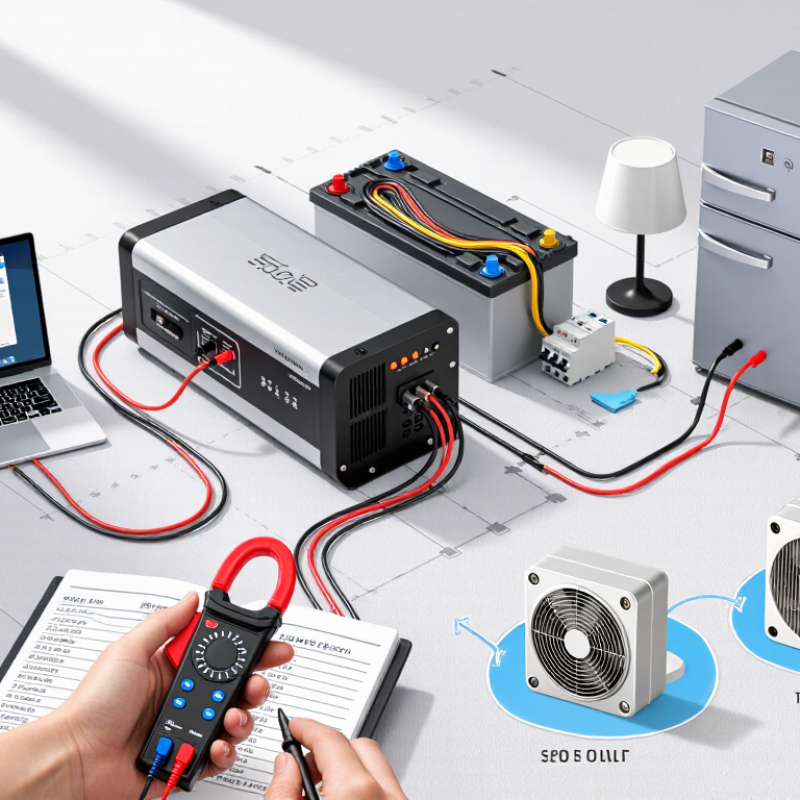
A 12V inverter converts direct current from a 12-volt battery into household-style alternating current. The battery supplies steady DC power, while most appliances expect AC power. Inside the inverter, electronic switches rapidly change the current’s direction. A transformer then raises the voltage, and control circuits shape the output waveform. The process sounds simple. It is not.
The inverter’s rating shows how much power it can deliver. A small unit may run lights, chargers, or a laptop. A larger model can support refrigerators or power tools, but startup surges matter. Motors often need two or three times their running power. Pure sine wave output closely matches utility electricity and suits sensitive electronics, medical equipment, and variable-speed motors. Modified sine wave output costs less, yet some devices may buzz, heat up, or work poorly.
Efficiency is never perfect. Heat, cable resistance, and internal switching consume energy. In practical use, a 500-watt load may draw more than 500 watts from the battery. Thick, short cables help reduce voltage loss. Secure connections matter too. A loose terminal can become hot quickly. Check continuous and surge ratings, ventilation, low-voltage protection, and grounding instructions before choosing a 12V inverter. My first sizing estimate was too optimistic because I ignored refrigerator startup current. That mistake was avoidable. Test the real load when possible.
| Selection Dimension | Typical Data or Range | What It Means | Practical Selection Guidance |
|---|---|---|---|
| Basic Function | Converts 12V DC battery power into household-style AC power, commonly 120V or 230V AC. | The inverter uses electronic switching circuits and a transformer or equivalent power stage to raise the voltage and create an alternating waveform. | Confirm that the inverter's AC output voltage and frequency match the equipment being powered. |
| Nominal DC Input | 12V nominal; actual battery voltage is commonly about 10.5–14.7V, depending on battery chemistry, charge level, load, and charging conditions. | “12V” describes the battery system category rather than a constant voltage. | Check the inverter's low-voltage shutdown and high-voltage protection limits before installation. |
| AC Output Waveform | Pure sine wave: smooth AC waveform. Modified sine wave: stepped approximation. |
Pure sine wave output is closer to utility electricity and generally produces less motor noise, heat, and compatibility risk. | Choose pure sine wave for medical equipment, variable-speed motors, refrigerators, pumps, audio systems, and sensitive electronics. |
| Continuous Output Power | Common 12V models range from approximately 150W to 2,000W continuous output. | This is the power the inverter can supply continuously under specified temperature and installation conditions. | Select continuous power at least 20–30% above the expected simultaneous running load. |
| Surge or Peak Power | Often about 1.5–3 times the continuous rating for a short period, depending on the design. | Motors, compressors, pumps, and some power tools may require substantially more power during startup. | Use the appliance's starting wattage, not only its running wattage, when checking compatibility. |
| Typical Load Examples | Phone charger: 5–30W Laptop: 45–100W LED lighting: 10–100W Small television: 50–150W Small refrigerator: approximately 80–250W running, with higher startup demand |
Actual consumption varies by model, operating mode, temperature, and startup behavior. | Add the running wattages of devices used at the same time and separately verify the highest startup load. |
| Estimated DC Current at Full Load | At approximately 90% efficiency: 300W output ≈ 28A 600W output ≈ 56A 1,000W output ≈ 93A 1,500W output ≈ 139A |
A 12V system draws high current because the DC voltage is relatively low. | Use short, adequately sized cables and suitable overcurrent protection. Current rises further when battery voltage falls. |
| Conversion Efficiency | Many quality inverters operate around 85–95% efficiency near their efficient load range. | The remaining energy becomes heat, so input power is always higher than AC output power. | For battery-runtime estimates, use the inverter's measured efficiency at the intended load rather than its best-case rating. |
| No-Load or Standby Consumption | Commonly about 0.5–2.0A at 12V, with some models using less in an energy-saving mode. | The inverter can drain the battery even when no appliance is connected. | Turn the inverter off when it is not required, especially in solar, vehicle, and backup applications. |
| Battery Energy Reference | A 12V, 100Ah battery has a nominal energy rating of approximately 1,200Wh before considering usable capacity, efficiency, and battery limits. | Usable energy is lower than the simple voltage-times-capacity calculation. | For a practical estimate, account for inverter losses, battery temperature, discharge limits, and battery age. |
| Approximate Runtime Formula | Runtime (hours) ≈ Battery voltage × Battery capacity (Ah) × Usable fraction × Inverter efficiency ÷ Load (W) | For example, a 12V, 100Ah battery at 90% efficiency and a 300W load will provide less than the theoretical 4 hours because the usable fraction is below 100%. | Use manufacturer test data where available, especially for high-current loads and lithium batteries with battery-management systems. |
| Battery Compatibility | Common battery types include lead-acid, AGM, gel, and lithium iron phosphate. | Each chemistry has different voltage behavior, discharge limits, charging requirements, and protection characteristics. | Match the inverter's low-voltage settings and operating profile with the battery manufacturer's specifications. |
| Recommended System Size | Up to about 300W: suitable for light electronics and small loads. 600–1,000W: suitable for several moderate loads. 1,500–2,000W: requires very high DC current and robust wiring. |
Larger inverters place greater demands on the battery, cables, terminals, fuses, and ventilation. | For loads above approximately 1,000W, consider whether a higher-voltage battery system would reduce cable current and installation difficulty. |
| Input Cable Considerations | Use the shortest practical cable run, correctly sized for the maximum DC current and installation length. | Undersized or excessively long cables cause voltage drop, heat, nuisance shutdowns, and reduced performance. | Follow applicable electrical standards and the cable manufacturer's ampacity ratings; secure all connections tightly. |
| Fuse or Circuit Protection | Install DC overcurrent protection close to the battery. The rating must protect the cable and accommodate normal operating current. | A fuse or breaker helps limit fire risk during a short circuit or wiring fault. | Do not select protection only from the inverter's wattage; coordinate the fuse, cable, battery capability, and installation standard. |
| Protection Features | Common features include low-voltage shutdown, over-voltage protection, overload protection, short-circuit protection, over-temperature protection, and reverse-polarity protection. | Protection circuits reduce damage caused by abnormal operating conditions. | Protection features do not replace correct wiring, ventilation, fusing, grounding, and safe operating procedures. |
| Cooling and Installation | Forced-air cooling is common for medium- and high-power units. The inverter should be installed in a dry, clean, ventilated location. | Heat reduces efficiency and can trigger thermal shutdown. | Keep ventilation openings clear, avoid enclosed spaces without airflow, and keep the unit away from fuel, water, and excessive heat. |
| Output Frequency | Typically 50Hz or 60Hz, depending on the intended electrical system. | Frequency affects motors, clocks, appliances, and other AC equipment. | Select the frequency required by the appliance and local electrical system; it may not be changeable after purchase. |
| Best Choice for 2026 | Pure sine wave, correctly sized continuous and surge ratings, high efficiency, low standby consumption, clear protection specifications, and suitable monitoring or remote control. | Modern selection should consider the complete DC system, not just the advertised AC wattage. | Prioritize electrical compatibility, safe installation, verified specifications, and total system efficiency over maximum output alone. |
| Note: Values are general engineering references. Actual performance depends on battery voltage, temperature, cable length, battery condition, load characteristics, installation quality, and the inverter's technical specifications. | |||
It changes 12-volt battery power from DC into household-style AC power. Electronic switches reverse current rapidly. A transformer raises the voltage, while control circuits shape the waveform.
Small inverters can power lights, chargers, and laptops. Larger units may run refrigerators or power tools. Check both running watts and startup watts.
Refrigerator compressors can briefly demand two or three times their normal power. An inverter sized only for running watts may shut down. My first estimate was too optimistic.
Pure sine wave output more closely matches utility electricity. It suits sensitive electronics and variable-speed motors. Modified sine wave units cost less, but some devices may buzz or overheat.
An inverter draws more battery power than its AC load suggests. Heat, switching losses, and cable resistance reduce efficiency. A 500-watt load may require more than 500 watts from the battery.
Use short, thick DC cables with secure, insulated terminals. Loose connections can become hot quickly. Avoid cigarette-lighter sockets for high continuous loads.
Look for low-voltage shutdown, overload protection, short-circuit protection, and thermal shutdown. Reverse-polarity protection is also helpful. These features reduce risk, but they cannot fix poor installation.
Install a correctly rated fuse close to the battery. Keep ventilation openings clear, then monitor cable temperature during normal use. For fixed household wiring, use a qualified electrician. Test the real appliance load when possible.
Choosing the right 12V Inverter in 2026 starts with understanding how it converts battery power into usable household AC electricity. Begin by listing the devices you plan to run, adding their running and starting wattage, and estimating how long they will operate. This helps determine the inverter’s continuous power rating, surge capacity, and the battery size needed for reliable performance without excessive discharge.
Next, consider whether a pure sine wave or modified sine wave output is suitable for your equipment, especially if you use sensitive electronics, motors, or chargers. Check essential safety features such as overload, short-circuit, over-temperature, low-voltage, and over-voltage protection. Review connection types, cable requirements, ventilation, and installation space before buying. Finally, compare efficiency, usable capacity, standby consumption, cooling design, and installation demands. A well-matched 12V Inverter should meet your real power needs while protecting both the connected devices and the battery system.

 NOVA New Energy