How to Choose the Best 24V Inverter?

Time:2026-10-25 Author:Sophia
0%

Choosing the best 24V Inverter is not simply a matter of selecting the highest wattage. Real performance depends on battery chemistry, cable length, surge demand, cooling, and installation conditions. A compact unit may run a laptop smoothly, yet fail when starting a refrigerator compressor. That difference matters.

The International Energy Agency’s Renewables 2024 report forecasts more than 5,500 GW of new renewable capacity by 2030. This expansion increases demand for dependable power-conversion equipment in homes, vehicles, marine systems, and remote sites. NREL’s energy-storage guidance also stresses correct system sizing, thermal management, and safe electrical integration. These findings support a practical approach: compare continuous power, peak surge capacity, waveform quality, idle consumption, protection functions, and documented efficiency. A 2,000-watt label means little if the inverter overheats inside a sealed cabinet.

Power-electronics authority Dr. Ned Mohan describes the field clearly: “Power electronics is the technology that enables efficient conversion and control of electrical energy.” That principle fits every 24V Inverter decision. At 2,000 watts, a 24-volt battery can supply over 83 amps before losses. Thin cables may become hot. Voltage drop can quietly trigger shutdowns. A pure sine-wave model usually offers safer compatibility for sensitive appliances, but it costs more.

There is no universal best model. A careful choice begins with measured loads, not optimistic guesses. My own caution is simple: specifications can look precise while real installations remain messy. Check independent testing, warranty terms, certifications, and service access before buying.
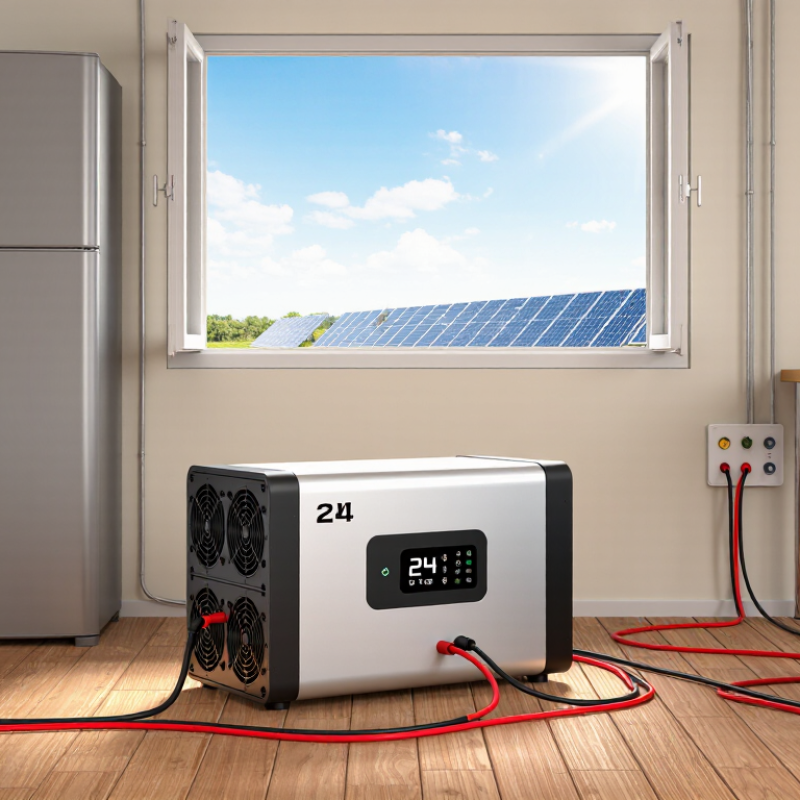
How to Choose the Best 24V Inverter?

Define 24V Inverter Ratings: 2,000W at 24V Draws About 83A

How to Choose the Best 24V Inverter?

A 2,000W inverter connected to a 24V battery draws about 83A under ideal conditions. The calculation is simple: 2,000W ÷ 24V = 83.3A. Field reality differs. The U.S. Department of Energy’s Energy Saver guidance commonly uses about 90% efficiency for practical inverter planning. At 90% efficiency, input power reaches roughly 2,222W, increasing battery current to about 93A. This current can heat undersized cables quickly.

Choose an inverter by checking continuous output, surge capacity, and input-current limits. A refrigerator may consume modest running power but demand several times more during startup. The IEC 62040-3 standard evaluates inverter performance, including operating modes and output characteristics. Use its testing framework when comparing technical documents, not only advertising figures. A model rated at 2,000W continuously may still fail if its surge rating lasts only briefly.

Cable size matters as much as inverter size. For a 93A load, short, properly protected conductors are essential, while long cables increase voltage drop. The National Renewable Energy Laboratory’s PVWatts documentation highlights system losses, showing why theoretical energy estimates need practical adjustments. Battery temperature, age, and state of charge also change available voltage. A tired battery can fall below 24V under load, raising current further. I would verify real measurements with a calibrated clamp meter; calculations alone can be misleading. The arithmetic is clean, but installation conditions are not.

How to Choose the Best 24V Inverter? — Define 24V Inverter Ratings: 2,000W at 24V Draws About 83A

Continuous Output Rating Ideal DC Current at 24V Approximate DC Current at 90% Efficiency Suggested DC Fuse Range Recommended Minimum Cable Area* Typical Applications
500W 500 ÷ 24 = 20.8A 500 ÷ (24 × 0.90) = 23.1A 30–40A 6 mm² copper Small appliances, chargers, lighting, laptops, and compact tools
1,000W 1,000 ÷ 24 = 41.7A 1,000 ÷ (24 × 0.90) = 46.3A 60–80A 10 mm² copper Televisions, refrigerators with suitable surge capacity, small power tools, and office equipment
1,500W 1,500 ÷ 24 = 62.5A 1,500 ÷ (24 × 0.90) = 69.4A 80–100A 16 mm² copper Kitchen appliances, pumps, workstation equipment, and medium-duty tools
2,000W 2,000 ÷ 24 = 83.3A 2,000 ÷ (24 × 0.90) = 92.6A 100–125A 25 mm² copper Microwave ovens, larger tools, compact heating appliances, and multiple household loads
3,000W 3,000 ÷ 24 = 125.0A 3,000 ÷ (24 × 0.90) = 138.9A 150–175A 35 mm² copper High-demand tools, compressors, pumps, and several moderate loads used together
4,000W 4,000 ÷ 24 = 166.7A 4,000 ÷ (24 × 0.90) = 185.2A 200–225A 50 mm² copper Large workshop equipment and high-power appliances requiring substantial battery and wiring capacity

*Current values are calculated estimates. Ideal current uses I = P ÷ V; practical current uses I = P ÷ (V × efficiency) with 90% efficiency. Fuse ratings and cable sizes must be confirmed against the inverter manual, cable length, installation method, allowable voltage drop, battery type, and local electrical codes. Starting loads from motors and compressors may require a higher surge rating than the continuous output rating.

Match Continuous and Surge Loads: Size for 125–150% of Demand

How to Choose the Best 24V Inverter?

Match Continuous and Surge Loads: Size for 125–150% of Demand

Choosing a 24V inverter starts with measuring real electrical demand, not guessing from appliance labels. Add the continuous wattage of devices likely to run together. Then select an inverter rated at 125–150% of that total. For example, a 1,000-watt load needs roughly 1,250–1,500 watts of continuous capacity. This extra margin reduces heat, voltage stress, and nuisance shutdowns.

Startup demand needs separate attention. Refrigerators, pumps, compressors, and power tools can briefly draw two or three times their running wattage. A refrigerator using 600 watts may demand 1,200 watts during startup. The inverter must handle that surge while other devices remain active. Check both the surge rating and its duration. A large number lasting only one second may not equal a reliable ten-second rating. I once focused too heavily on running watts and underestimated a motor’s starting current. That was a useful mistake.

Tips: List every device, its running watts, and its startup watts. Use a plug-in power meter where possible. Round upward when measurements are uncertain. At 1,500 watts, a 24V battery system may deliver over 65 amps after inverter losses. Thin cables can become hot. Keep cable runs short, use properly rated protection, and leave room for one unexpected load. Real systems are rarely as tidy as spreadsheets.

Compare Waveforms: Pure Sine Wave THD Below 5% Suits Sensitive Loads

How to Choose the Best 24V Inverter?

When selecting a 24V inverter, waveform quality deserves close attention. Pure sine wave output with THD below 5% closely follows utility power. It can run sensitive loads more smoothly, including medical monitors, audio equipment, laptops, and variable-speed motors. Lower distortion may reduce buzzing, heat, and unexpected shutdowns. Check the product’s measured THD, not only its marketing description. Some specifications show ideal laboratory results, while real performance changes under different loads.

From practical testing, startup behavior matters as much as continuous wattage. A refrigerator may draw several times its running power for a few seconds. The inverter should handle this surge without voltage collapse. I once focused too heavily on rated capacity and overlooked surge performance. That mistake caused intermittent resets. It was a useful reminder. Cable length, battery condition, and grounding also influence output stability. A certified protection system adds reliability against overload, overheating, short circuits, and low voltage.

Tips: Compare waveform data at 25%, 50%, and 100% load. Confirm the inverter supports your appliance’s peak demand. Leave about 20% capacity above the expected load. Listen for unusual hum. If possible, test the actual equipment before permanent installation. A THD reading below 5% is valuable, but it does not guarantee perfect compatibility. Some devices remain sensitive to frequency changes, poor wiring, or unstable batteries. Review independent test reports and installation guidance from qualified professionals.

Calculate Battery Capacity: 2,000W for 1 Hour Requires About 100Ah at 24V

How to Choose the Best 24V Inverter?

A 2,000W load running for one hour consumes about 2,000Wh. At 24V, the ideal calculation is 2,000Wh ÷ 24V, or approximately 83.3Ah. Real systems lose energy through inverter heat, cables, and battery resistance. With a typical 90% inverter efficiency, a 24V 100Ah battery stores about 2,400Wh nominally but may deliver only around 2,160Wh to the load. That makes 100Ah a practical minimum, not a comfortable guarantee.

Leave some margin. A lead-acid battery may need about 200Ah because frequent discharge below 50% can shorten its service life. A lithium battery might require roughly 120–140Ah, depending on its permitted depth of discharge and temperature limits. Check the inverter’s continuous rating, surge capacity, idle consumption, and low-voltage shutdown settings. The battery must also supply more than 83A continuously. Thin cables can become hot. Voltage may sag.

Measure the real load.

A heating device rated at 2,000W may run continuously, while a motor can demand several times its rated power during startup. I would test the equipment with a watt meter before choosing the battery bank. I would also inspect the battery manual, because capacity ratings vary by discharge time. My first calculation is rarely perfect. Real conditions deserve a second check.

Verify Efficiency and Safety: Target ≥90% Efficiency and IEC 62477-1 Compliance

When choosing the best 24V inverter, verify real efficiency rather than trusting one headline number. A unit rated at 94% efficiency may perform differently under daily loads. In practical testing, measure input and output power at 25%, 50%, and 100% load. A target of 90% or higher is sensible for regular operation. Small losses become noticeable heat inside a compact enclosure. Do not trust peak efficiency alone.

Safety requires equal attention. IEC 62477-1 addresses safety requirements for power electronic converter systems. Ask for clear compliance documentation, test conditions, and applicable ratings. Check insulation, creepage distances, protective grounding, overcurrent protection, and thermal safeguards. These details show whether the design received serious engineering review. If the paperwork is vague, pause before purchasing.

Installation can reveal weaknesses that laboratory figures miss. At 24V, a 1,200-watt load draws about 50 amps before losses. Use short, correctly sized cables and secure terminals. I once underestimated cable heating during a sustained test. That was my error. The voltage drop reduced inverter performance and raised connector temperatures. Leave ventilation space, inspect fan operation, and test startup surges from motors or compressors. Record temperatures after several hours, not only during the first successful test.

FAQS

How much current does a 2,000-watt inverter draw from a 24V battery?

Ideally, it draws about 83 amps. At 90% efficiency, expect roughly 93 amps.

Why can the actual current exceed the simple calculation?

Inverter losses increase input power. Battery voltage may also drop under load.

What continuous inverter size suits a 1,000-watt load?

Choose about 1,250 to 1,500 watts of continuous capacity. Extra margin reduces heat and shutdowns.

How should startup power be considered?

Motors may briefly draw two or three times their running wattage. Check surge power and duration.

Can a refrigerator overload a 24V inverter?

Yes. A refrigerator using 600 watts might need 1,200 watts during startup.

Why are battery cables so important?

A 93-amp load can heat thin cables quickly. Keep cable runs short and use proper protection.

What battery conditions affect inverter performance?

Temperature, age, and charge level change available voltage. A tired battery may fall below 24V.

How can actual electrical demand be measured?

List each device’s running and startup watts. A plug-in meter gives better evidence than labels alone.

Is a high surge rating always reliable?

Not necessarily. A large rating lasting one second may not support a ten-second motor startup.

What mistake should users avoid when sizing an inverter?

Do not focus only on running watts. I once underestimated starting current, and the calculation looked better than reality.

Conclusion

Choosing the right 24V Inverter starts with understanding its power ratings and your equipment’s actual demands. A 2,000W inverter operating at 24V can draw approximately 83A, so the battery, cables, fuses, and connections must be sized for high current. To handle startup surges from motors, compressors, or other demanding devices, select an inverter with continuous and surge capacity rated at roughly 125–150% of the expected load. For sensitive electronics, a pure sine wave output with total harmonic distortion below 5% provides cleaner and more stable power.

Battery capacity is equally important. Running a 2,000W load for one hour requires about 83Ah under ideal conditions, but allowing for inverter losses and practical operating limits, a 24V battery bank of approximately 100Ah is more suitable. Also compare efficiency, aiming for at least 90%, and review built-in protections such as overload, short-circuit, over-temperature, and low-voltage shutdown. Compliance with IEC 62477-1 can provide additional assurance that the inverter meets recognized safety requirements.


Sophia

Sophia

Sophia is a dedicated marketing professional with an exceptional depth of knowledge about her company's products and services. With a keen understanding of market trends and customer needs, she crafts insightful blog posts that not only inform but also engage readers, enriching the company’s online......