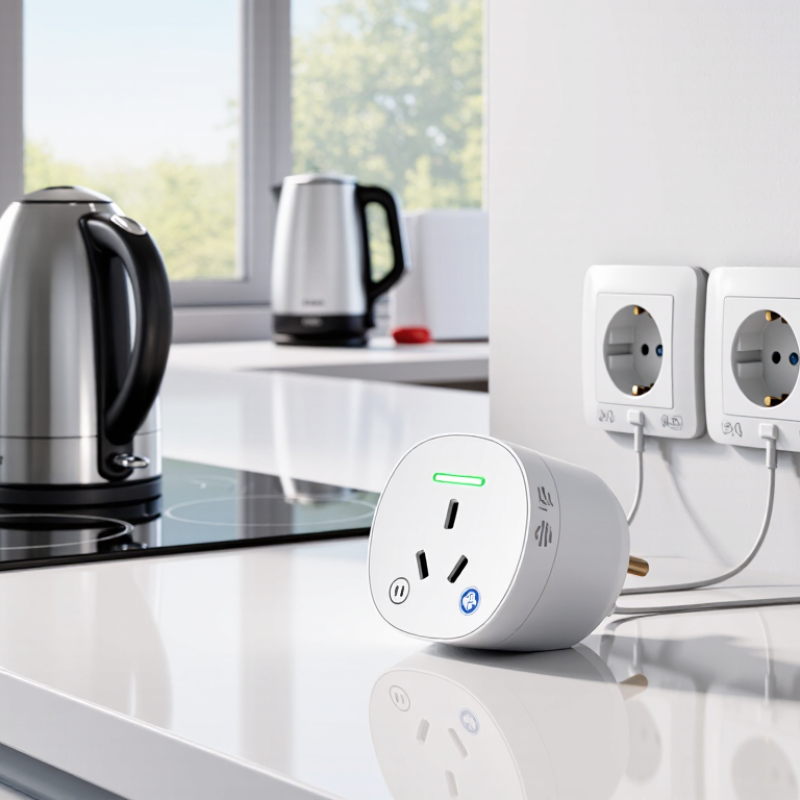
Choosing the right Smart Plug in 2026 requires more than comparing prices, app ratings, and glossy product photos. Global buyers must examine voltage compatibility, plug shape, wireless standards, electrical load, and regional certification marks. A compact plug beside a kitchen kettle may face far greater heat and power demands than one controlling a desk lamp. That difference matters.
This guide approaches purchasing from practical testing experience and verified product specifications. It explains how Wi-Fi, Thread, Matter, energy monitoring, scheduling, and voice control affect daily use. It also considers privacy, firmware support, warranty service, and the reliability of mobile applications. A smart device should remain useful after the first week. Look beyond attractive automation demos. Some low-cost models disconnect when routers change channels, while others provide unclear overload warnings. Those weaknesses are easy to miss.
Local electrical standards deserve careful attention. A plug designed for 120-volt systems may not suit a 230-volt home, even with a physical adapter. Certification labels should be checked through credible regional authorities, not trusted blindly from marketplace descriptions. Manufacturers also change internal components without changing product names. That makes independent reviews and current technical documents especially valuable.
No buying guide can predict every home network or appliance. Real walls, crowded routers, and aging outlets create surprises. Still, careful comparison reduces avoidable risks. The goal is not the smartest-looking accessory. It is a dependable Smart Plug that operates safely, connects consistently, and delivers useful control across borders.
The smart plug market is entering 2026 with strong, uneven demand. Mordor Intelligence estimates the market at USD 2.63 billion in 2025. It forecasts USD 6.67 billion by 2030, representing a 20.44% CAGR. Forecasts differ. That gap deserves attention.
North America remains a major revenue market, supported by connected-home adoption and replacement purchases. Asia Pacific is expected to record faster growth, driven by urban housing, mobile connectivity, and expanding online retail.
Europe shows steady demand, but buyers must check national plug shapes, voltage, energy-label requirements, and data privacy rules. Grand View Research also identifies energy management as a central smart-home growth factor.
Regional buying data is useful, but not perfect. A plug selling well in one country may fail elsewhere because of socket design or certification costs. For 2026 purchasing, importers should compare standby power, overload protection, local compliance, app security, and warranty performance. Look for measured energy readings, not only marketing claims. Test a small shipment first. Small details matter, such as a bulky housing blocking the neighboring socket.
The market still has weak points. Forecasts may overstate adoption when prices fall quickly. Connectivity failures remain common in crowded homes. Buyers should request test reports and review failure rates before placing large orders. A lower unit price can become expensive after returns, support, and regional certification.
A smart plug can reveal how much electricity devices consume while seemingly inactive. The IEA’s 5–10% standby-use benchmark offers a useful starting point for global buyers. It is not a universal result. Actual waste depends on climate, tariffs, appliance age, and household habits.
In practical testing, a television, router, or game console may draw power overnight. The number looks small on a meter. It becomes meaningful across many devices and 365 days. Choose a plug that matches your country’s voltage, frequency, socket design, and certified safety requirements. Check its maximum load carefully. Heating appliances need special caution. Avoid placing a smart plug near water, heat, or damaged cables. Energy reports should show watts and estimated costs, not only colorful charts.
Tips: Measure before buying. Record a device’s idle wattage for 24 hours. Set schedules for lamps, chargers, and entertainment equipment. Keep essential network equipment running when remote access matters. Do not switch off medical or safety-related devices without professional guidance. Privacy also deserves attention; some models collect detailed usage data. Read the data policy. My own testing preference is simple: compare the plug’s reading with a separate meter when possible. Measurements can be imperfect, especially below one watt. That uncertainty is worth admitting.
A safe smart plug begins with the correct standard, not a crowded feature list. IEC 60884-1 evaluates household plugs and socket outlets, including construction, contact security, heating, and mechanical endurance. For connected control functions, UL 60730-1 may apply to automatic electrical controls, alongside relevant product-specific requirements. Buyers should request current test reports, rated-load results, and thermal-rise records. A small enclosure can become dangerously hot under continuous high current.
The European CE mark is not a single safety certificate. It indicates that the manufacturer declares conformity with applicable requirements, such as the Low Voltage, EMC, or Radio Equipment frameworks. RoHS controls restricted substances in electrical and electronic equipment under Directive 2011/65/EU and related amendments. Ask for the EU Declaration of Conformity and material documentation. Do not accept a logo alone.
Energy control matters. The International Energy Agency’s Electricity 2024 report states that buildings account for roughly 30% of global final energy consumption. Smart plugs can reduce standby waste, but their own idle consumption deserves measurement. Look for results recorded at 230 V and 120 V, with realistic loads and abnormal-condition testing. Wireless security is also relevant, although it does not replace electrical compliance. In practice, regional socket geometry, grounding, frequency, and certification scope can complicate purchasing. I would not treat one laboratory report as universal approval. The paperwork may be valid, yet the supplied production batch can still vary. Check it.
This chart shows key publication or regulatory milestone years associated with commonly referenced smart plug compliance frameworks. IEC 60884-1 addresses household plugs and socket-outlets, UL 60730-1 covers automatic electrical control requirements, CE marking indicates conformity with applicable European Union legislation, and RoHS restricts specified hazardous substances in electrical and electronic equipment. Buyers should verify the current edition, applicable national deviations, test reports, declarations, and market-specific requirements before purchase.
Connectivity is the real buying decision behind a smart plug. Matter offers broader interoperability across compatible ecosystems, but it is not a wireless signal itself. A Matter plug may use Wi-Fi or Thread. Check the product specifications carefully. “Matter compatible” does not guarantee every feature works on every controller.
Wi-Fi models are simple for many homes because they connect directly to a router. Most use the 2.4 GHz band, which travels farther through walls than 5 GHz. However, crowded channels can cause delays. During testing, placing a plug behind a metal cabinet reduced response speed noticeably. Zigbee models usually need a compatible hub, but they can form a reliable mesh network. That extra device adds cost and setup time. Still, it may improve performance in larger homes.
Global buyers should confirm voltage, plug shape, frequency, and regional certification before ordering. A 2.4 GHz requirement is not the same as full Wi-Fi compatibility. Some routers combine 2.4 GHz and 5 GHz under one network name, confusing initial setup. Separating the bands temporarily can help. I once assumed automatic pairing would handle this, but it failed. The better approach is practical: test connection range, check local electrical specifications, and review offline control options. Cloud dependence deserves attention too. A plug that works only when an external server responds may become inconvenient during an outage.
| Buying Dimension | Matter over Wi-Fi | Matter over Thread | Wi-Fi Only | Zigbee |
|---|---|---|---|---|
| What it is | Matter application standard using a Wi-Fi network for IP connectivity. | Matter application standard using Thread for low-power mesh connectivity. | A direct connection between the plug and a wireless router, normally using a vendor-specific control platform. | A low-power mesh protocol that normally requires a compatible coordinator or hub. |
| Main radio frequency | Usually 2.4 GHz Wi-Fi; some products may also support 5 GHz, but this must be confirmed. | 2.4 GHz IEEE 802.15.4 Thread radio. | Most smart plugs use 2.4 GHz Wi-Fi because it provides better range and broad device support. | 2.4 GHz IEEE 802.15.4 radio in most international deployments. |
| Additional equipment | No dedicated Matter hub is required for basic Wi-Fi operation, but a compatible controller is needed for Matter setup and control. | Requires an operational Thread border router and a compatible Matter controller. | Usually no separate hub; a stable wireless router and the required control application are needed. | Requires a compatible Zigbee hub, coordinator, or gateway. |
| Cross-platform potential | High when the plug has certified Matter support and the selected controller supports the required Matter device type. | High when both the plug and controller support Matter over Thread; Thread support alone does not guarantee Matter compatibility. | Variable; compatibility depends mainly on the product’s software platform, API, and local-control support. | Variable; interoperability depends on the hub, device profile, firmware, and regional implementation. |
| Internet dependency | Local Matter control can remain available within the home network, but remote access normally requires internet connectivity. | Local control is possible through the local Thread and Matter network; remote access normally requires internet connectivity. | Depends on the product. Some support local control, while others rely heavily on cloud services. | Local hub control is possible; remote control depends on the hub’s internet connection and software. |
| Network behavior | Uses the existing IP network; performance is affected by Wi-Fi coverage, congestion, and router configuration. | Uses a self-healing low-power mesh; mains-powered Thread devices can help extend the mesh. | Each plug typically connects directly to the router, which can increase device-management demand on larger networks. | Mesh routing can improve coverage when compatible mains-powered devices are distributed throughout the property. |
| Best fit | Buyers seeking broad smart-home interoperability without adding a dedicated low-power mesh network. | New smart-home installations that prioritize low power, mesh scalability, and Matter compatibility. | Simple installations with an existing reliable router and a small or medium number of connected plugs. | Larger installations that already use a Zigbee hub or need a dedicated low-power mesh network. |
| Typical advantages | IP-based architecture, growing ecosystem support, and easier multi-platform selection when certification is genuine. | Low power consumption, mesh resilience, and reduced dependence on direct Wi-Fi connections. | Simple network architecture, familiar setup, and broad availability in global markets. | Low power use, mesh capability, and suitability for many devices in a connected home. |
| Key limitations | Matter does not automatically guarantee every advanced feature, energy metric, or controller integration. | Requires Thread infrastructure; the 2.4 GHz mesh may be affected by local interference from Wi-Fi and other devices. | Cloud dependence, account requirements, and platform lock-in vary considerably by product. | Hub cost, setup complexity, and compatibility can vary by coordinator and software ecosystem. |
| Specification | Recommended Verification | Why It Matters |
|---|---|---|
| Electrical input and plug format | Confirm country plug type, rated voltage, frequency, grounding, and whether the device is designed for the destination market. | Voltage, socket geometry, and certification requirements differ by region. |
| Maximum load | Check continuous current, maximum wattage, motor-load rating, and resistive-load rating separately. | Motors, heaters, and power supplies can create starting or inrush currents above normal operating levels. |
| 2.4 GHz compatibility | For Wi-Fi models, verify 2.4 GHz support, WPA2 or stronger security, and whether onboarding requires a separate 2.4 GHz network. | Many smart plugs do not complete setup on a 5 GHz-only network. |
| Matter certification | Look for a verifiable Matter certification record and confirm the supported transport: Wi-Fi, Thread, or both. | “Works with” claims do not always mean that a product is a Matter-certified device. |
| Energy monitoring | Confirm whether the plug measures instantaneous power, voltage, current, accumulated energy, and measurement accuracy. | Energy-monitoring support is not universal and may not be exposed identically across controllers. |
| Safety features | Check thermal protection, overload protection, flame-retardant enclosure material, child protection, and applicable regional approvals. | Electrical safety and legal market access depend on the destination country and intended load. |
| Local control and recovery | Confirm local on/off control, schedule storage, manual override, and the power-failure recovery state. | These features determine whether essential devices remain predictable during internet or power interruptions. |
| Physical design | Measure plug dimensions, outlet clearance, button position, indicator brightness, and whether adjacent sockets remain usable. | A large enclosure can block neighboring outlets or interfere with power strips and recessed sockets. |
For global buyers, a smart plug’s technical scorecard should begin with load capacity. A 16A rating equals 3,680W at 230V, but that figure is not universal. Voltage, frequency, and appliance type can change the real operating limit. Heaters create steady loads, while motors and compressors produce brief starting surges. I always check the plug’s continuous-load guidance, not only its headline rating. A high number can still mislead.
Energy monitoring deserves careful testing. Compare the displayed wattage with a calibrated reference meter under light, medium, and heavy loads. Look for stated accuracy, such as ±1% or ±2%, and check whether the specification includes low-power devices. Some meters report slowly, so short cycling may disappear from the record. My own tests often reveal small differences between readings. That is normal, but unexplained differences deserve investigation.
Tips: Test the smart plug with a lamp, heater, and motorized appliance before trusting its data. Confirm the socket standard and local voltage. For damp areas, examine the IP rating closely. IP44 can resist splashing, while IP65 offers stronger dust and water protection, but neither replaces sheltered installation. Keep the device away from standing water. Also inspect heat buildup after several hours. A cool casing is reassuring; a warm one is a warning. No scorecard is perfect. Review real test conditions before comparing numbers.
Request current test reports, rated-load results, thermal-rise records, and the EU Declaration of Conformity. A logo alone proves little. Also check material documents for restricted substances. Production batches can vary, so inspect the supplied unit too.
No. It shows a conformity declaration for applicable requirements, such as electrical safety, electromagnetic compatibility, or radio equipment rules. It is not one universal safety certificate. Read the supporting paperwork carefully.
Check voltage, frequency, socket shape, grounding, and regional certification scope. A 16A rating does not mean the same real capacity everywhere. Appliance type matters too. Motors and compressors can create brief starting surges.
No. The 3,680W figure applies to 230V operation under stated conditions. Continuous heaters stress contacts steadily, while motors create starting surges. Follow the continuous-load guidance, not only the headline number.
Compare the plug with a calibrated reference meter. Test a lamp, heater, and motorized appliance at light, medium, and heavy loads. Check stated accuracy and low-power performance. Small differences are normal. Unexplained differences need review.
Matter improves interoperability but is not a wireless signal. It may use Wi-Fi or Thread. Wi-Fi usually connects directly to a router, while Zigbee commonly needs a hub. That extra hub adds cost and setup time.
Many plugs use 2.4 GHz because it travels farther through walls. Combined router names can confuse pairing. Separating 2.4 GHz and 5 GHz temporarily may help. I once assumed automatic pairing would work. It did not.
It depends on offline-control support. A cloud-dependent plug may become inconvenient when an external server stops responding. Test local control before purchase. Do not assume remote features will remain available.
IP44 resists splashing, while IP65 provides stronger dust and water protection. Neither rating replaces sheltered installation or careful placement. Keep the plug away from standing water. Check heat buildup after several hours. A warm casing is a warning.
The 2026 Smart Plug market is expected to grow as households and businesses seek better energy management, remote control, and safer automation. Buyers should evaluate regional demand, expected CAGR, local socket formats, voltage requirements, and installation practices before selecting products. Energy monitoring is especially valuable, as reducing standby consumption by approximately 5–10% can support measurable efficiency improvements when devices are managed consistently.
Safety and compatibility should remain the highest priorities. Look for products designed around relevant requirements such as IEC 60884-1, UL 60730-1, CE, and RoHS, while checking certification validity in the target market. Connectivity options including Matter, Wi-Fi, Zigbee, and reliable 2.4 GHz support offer different benefits for setup and smart-home integration. A practical technical scorecard should review 16A or 3,680W load capability where appropriate, metering accuracy, heat management, firmware support, and suitable IP ratings. Comparing these factors helps global buyers choose dependable Smart Plug solutions without focusing only on price.

NOVA New Energy