2026 Best MOES Smart Switch for Global Buyers?

Time:2026-09-19 Author:Sienna
0%

The 2026 smart-home market is moving from novelty toward practical energy control. The International Energy Agency reports that buildings consume about 30% of global final energy and produce roughly 26% of energy-related emissions. A wall switch cannot solve this challenge alone. However, it can help households manage lighting schedules, standby loads, and daily routines more precisely.

For global buyers, choosing the best MOES Smart Switch requires more than checking app features. Voltage compatibility, neutral-wire requirements, load limits, local certifications, and wireless stability can determine whether installation is safe and dependable. Matter support also deserves attention, as the Connectivity Standards Alliance continues developing a common smart-home language across ecosystems. Compatibility looks simple. It rarely is.

This guide will compare MOES models through practical buying criteria, including Wi-Fi, Zigbee, and Matter connectivity; mobile control; scene automation; voice-assistant support; and privacy considerations. It will also examine regional differences across North America, Europe, Asia-Pacific, and other markets. Industry forecasts often show continued smart-home growth, but forecasts are not guarantees. Real performance depends on building wiring, router quality, cloud availability, and user habits. That limitation matters.

A reliable recommendation should therefore balance specifications with installation realities. Buyers should verify certification marks and local electrical requirements before purchase. The best model may not be the most feature-heavy. It may be the switch that works quietly every day.
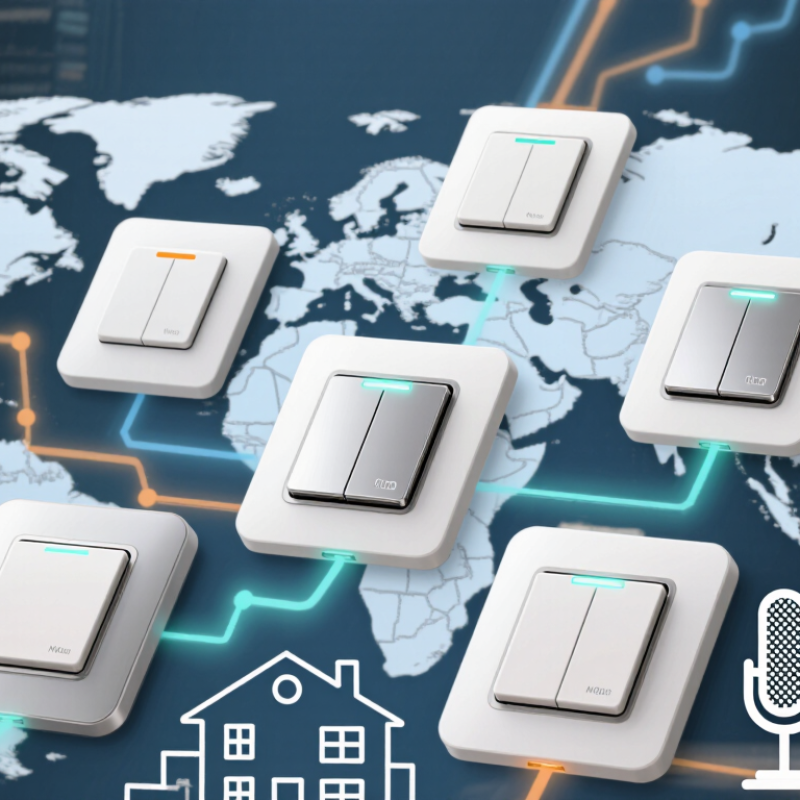
2026 Best MOES Smart Switch for Global Buyers?

MOES Smart Switch Technology and Product Categories in 2026

2026 Best Smart Switch for Global Buyers?

Smart switch technology in 2026 is moving beyond simple remote control. Buyers now compare communication protocols, installation needs, and long-term reliability. Common categories include single-pole switches, dimmers, scene controllers, curtain switches, relay modules, and energy-monitoring models. No-neutral versions help older homes, but they may require careful load testing. Newer devices may support Matter, Thread, Wi-Fi, or Zigbee, depending on the target market.

From practical installation experience, compatibility matters more than a crowded feature list. A switch should match local voltage, wiring, wall-box depth, and circuit protection. App control is useful, but physical buttons remain important during network outages. Energy measurement can reveal a heater’s daily pattern or a forgotten appliance. Privacy also deserves attention. Choose products with clear update policies, documented certifications, and stable local control where possible. Some specifications still look impressive but lack enough independent testing. That is worth questioning.

Tips: Check the neutral wire before ordering. Confirm terminal labels with an electrician. Test the minimum dimming load. Keep manual control available. For global projects, buy samples first and record pairing time, heat, response speed, and offline behavior. A perfect switch does not exist. The best choice fits the building, users, and local technical requirements.

Key Features Global Buyers Should Evaluate Before Purchasing

2026 Best Smart Switch for Global Buyers: Key Features to Evaluate Before Purchasing

A reliable smart switch should match your country’s voltage, frequency, wiring system, and wall-box size. Check these details before comparing app features. Some homes lack a neutral wire, so a compatible no-neutral model may be necessary. Others require a bypass component for low-power LED lamps. Do not guess here. A qualified electrician should verify the circuit and maximum load.

Connectivity also deserves careful testing. Wi-Fi models are convenient, but they may depend heavily on internet access. Zigbee, Thread, or other local protocols can provide steadier control when the router fails. Matter support may improve cross-platform compatibility, although setup is not always effortless. Confirm whether the switch supports local control, schedules, scenes, voice platforms, and power recovery after an outage. Small details matter.

Safety evidence should guide the purchase. Look for recognized electrical certifications, clear manuals, test reports, warranty terms, and accessible technical support in your region. A good product should identify relay ratings, operating temperature, firmware update methods, and data-handling practices. Privacy settings matter too. A cloud-only switch may create unnecessary dependence. That is not automatically unsafe, but it deserves scrutiny. Installation can also expose weaknesses. Terminals may feel cramped, labels may be vague, and the included screws may not fit every box. Product pages often simplify these issues. Real homes do not.

Compatibility with Wiring, Hubs, Voice Assistants, and Smart Home Systems

Choosing the best smart switch in 2026 starts with the wall box, not the app. Check whether your home uses a neutral wire. Some switches need one, while others support no-neutral installations. Measure the box depth, especially in older apartments. A crowded box can turn installation into a frustrating puzzle. I once underestimated this detail. That was avoidable. Use a qualified electrician when local rules require professional work.

Compatibility also depends on the communication method. A Wi-Fi switch may work without a hub, but it can increase network traffic. Zigbee, Thread, or another low-power protocol may need a separate bridge. Confirm that the hub supports the exact device profile, not merely the same protocol. Otherwise, pairing may succeed while advanced features remain unavailable. Check 2.4 GHz requirements, firmware updates, and offline control before purchasing. These small checks reduce unpleasant surprises.

Voice control should be tested as a complete routine. Can the assistant turn off the light, report its state, and handle a schedule? Scenes may behave differently across smart home ecosystems. Open standards can improve flexibility, but certification still matters. Read regional specifications carefully because voltage and frequency vary between markets. I would not trust a product page alone. Installation notes and independent user reports often reveal the missing limitation. That limitation may matter.

2026 Best MOES Smart Switch for Global Buyers? - Compatibility with Wiring, Hubs, Voice Assistants, and Smart Home Systems
Switch Profile Typical Wiring Requirement Electrical Load Compatibility Connectivity Hub or Border Router Requirement Voice Assistant Compatibility Smart Home System Compatibility Best Use Case
Neutral-Wire Wi-Fi Switch Line, load, neutral, and ground where required; neutral wire must be present in the wall box. Suitable for many LED, incandescent, and fan loads when the rated voltage, current, and load type match the installation. 2.4 GHz Wi-Fi is common; some models also support 5 GHz. No dedicated hub required Usually supports Alexa and Google Home through the device platform; Siri control depends on HomeKit or Matter certification. Works with the manufacturer’s app and may integrate with common automation platforms through cloud services, Matter, or third-party bridges. Homes with a neutral wire and reliable Wi-Fi coverage.
No-Neutral Wi-Fi Switch Designed for line and load wiring without a neutral conductor; many installations require a supplied bypass or capacitor across the light fixture. Best for compatible lighting circuits; very low-wattage LED lamps may flicker or glow when switched off. Usually 2.4 GHz Wi-Fi. No dedicated hub required Alexa and Google Home support is common through the associated platform; Siri support requires compatible HomeKit or Matter implementation. Compatibility depends heavily on the exact protocol and certification; cloud-only models may not provide local control. Older homes where a neutral wire is unavailable.
Zigbee Switch Neutral-wire and no-neutral versions exist; no-neutral models must be checked for minimum load and bypass requirements. Depends on the relay rating and lamp type; LED compatibility should be confirmed before installation. Zigbee 3.0 or another Zigbee profile. Requires a compatible Zigbee hub or coordinator Alexa and Google Home work through a compatible hub; direct voice control is not provided by the switch alone. Can work with platforms that support the relevant Zigbee device type, provided the hub exposes the switch correctly. Large homes, mesh networks, and installations seeking lower Wi-Fi congestion.
Matter-over-Wi-Fi Switch Neutral-wire or no-neutral design, depending on the model; electrical installation rules remain unchanged by Matter. Use only within the marked voltage, current, and load specifications; Matter does not define electrical load limits. Wi-Fi using the Matter application layer; setup normally uses Bluetooth Low Energy. Requires a Matter controller; remote access may also require the platform’s home hub. Designed for compatible Alexa, Google Home, Apple Home, and other Matter ecosystems. Strong cross-platform potential, subject to the product’s certified device type and supported functions. Buyers wanting broad ecosystem interoperability and reduced dependence on one app.
Matter-over-Thread Switch Neutral-wire and no-neutral versions are possible; verify the exact wiring diagram and minimum-load requirements. Electrical performance is determined by the switch hardware, not the Thread protocol. Thread mesh networking; commissioning commonly uses Bluetooth Low Energy. Requires a Matter controller and a Thread Border Router Compatible with supported Alexa, Google Home, Apple Home, and other Matter controllers. Good multi-platform potential with local control where the ecosystem supports it. Modern smart homes with an established Thread network and compatible controllers.
RF or Proprietary Hub-Based Switch Wiring varies by model; both neutral-wire and no-neutral designs are available. Must be matched to the specified lighting or motor load; RF capability does not guarantee LED compatibility. Sub-GHz RF or another proprietary wireless protocol. Requires the matching gateway or hub Voice control is available only when the hub supports the relevant assistant integration. Usually limited to the hub’s supported ecosystem unless an approved bridge is available. Installations prioritizing long wireless range or reduced 2.4 GHz traffic.
Single-Pole Switch Controls one circuit from one location; wiring may include line, load, neutral, and ground depending on design. Suitable for a standard single-location lighting circuit when the rated load is not exceeded. May use Wi-Fi, Zigbee, Thread, Matter, or a proprietary protocol. Depends on the selected wireless protocol. Depends on the wireless protocol and ecosystem integration. Generally the simplest smart-switch configuration to integrate and automate. Bedrooms, offices, hallways, and other single-control locations.
3-Way or Multi-Way Switch Requires a compatible multi-way wiring scheme; some systems use an accessory switch, traveler wires, or wireless companion controls. Load compatibility must be checked for the primary switch and any companion device. May use Wi-Fi, Zigbee, Thread, Matter, or a proprietary wireless protocol. Depends on the selected system; companion switches may require the same ecosystem. Voice control is usually available through the primary connected switch or hub integration. Compatibility varies significantly; not every smart switch supports multi-way operation. Staircases, corridors, and rooms controlled from two or more locations.

Important installation note: Compatibility depends on the exact model, regional voltage, frequency, certification, load rating, wall-box depth, and local electrical code. Turn off power at the circuit breaker and use a qualified electrician for installation. A neutral-wire requirement, bypass requirement, hub requirement, and supported voice assistant should be verified from the product documentation before purchase.

Installation, Safety Standards, Regional Versions, and Network Requirements

2026 Best Smart Switch for Global Buyers?

Installation, Safety Standards, Regional Versions, and Network Requirements

Choosing a smart switch for overseas use involves more than checking its design or app features. Confirm the wall-box size, wire layout, and rated voltage before ordering. Many installations need a neutral wire, while some models support no-neutral wiring through a bypass component. Turn off the circuit breaker and verify the circuit is dead with a suitable tester. Do not rely only on the wall switch position.

Safety approval varies by market.

Look for certification marks accepted in your region, such as CE, UKCA, UL, or equivalent national requirements. A certification logo alone is not enough; verify the product’s declared voltage, current, frequency, and load type. Resistive lamps, motors, and LED drivers can behave differently. A switch rated for lighting may not safely control a fan or heater.

Regional versions also affect performance.

A 220–240 V model may not suit a 100–120 V circuit, even if the connector looks identical. Wireless versions commonly use 2.4 GHz Wi-Fi, but some networks reject older security settings or crowded channels. Test signal strength beside the switch, not across the room. Cloud features may require internet access, while local control can remain available during an outage. That difference matters.

One practical lesson is easy to miss: installation space matters. Tight boxes can trap heat and strain terminals. I would recheck the wiring twice. Mistakes happen. A qualified electrician should handle uncertain circuits or unfamiliar regional requirements.

How to Select the Best MOES Smart Switch for Different Use Cases

Choosing the best smart switch depends on the room, wiring, and daily habits. Statista Market Insights projected global smart-home revenue at over $150 billion in 2024, but bigger sales do not guarantee better performance. For bedrooms, choose quiet wireless control, scene scheduling, and a physical button. Kitchens need reliable connectivity and moisture-resistant installation areas. For rental homes, select no-neutral models or removable systems, where local wiring permits. Always verify voltage, load rating, and switch-box depth before purchase.

For energy-focused homes, select switches with power monitoring and automation support. The International Energy Agency reports that connected controls can help reduce household energy use, especially when heating and lighting respond to occupancy. Matter-enabled products may improve cross-platform compatibility, while Wi-Fi suits simple installations. Thread can be attractive for larger networks, but it usually requires a compatible border router. My field experience suggests that signal stability matters more than a long feature list. I still find some “easy” installations surprisingly difficult.

Tips: Test one switch first. Check neutral-wire requirements. Measure the box. Keep manual control. Review privacy settings, firmware support, and outage behavior. Parks Associates has repeatedly identified reliability and installation complexity as major barriers to smart-home adoption. A stylish switch that fails after a router restart is not a smart choice. For bathrooms or damp locations, follow local electrical rules and use only appropriately rated equipment.

2026 Best Smart Switch Selection by Use Case

The chart compares practical feature priorities on a 0–5 scale. Retrofit apartments typically require flexible wiring and reliable local control, while large homes place greater emphasis on multi-way control and protocol interoperability. Energy monitoring is most useful for utility rooms, appliances, and other high-consumption circuits.

FAQS

What should global buyers check before choosing a smart switch?

Check voltage, frequency, wiring, wall-box depth, and circuit protection.

Is a neutral wire required for every smart switch?

No. Some models work without a neutral wire.

Which connectivity type is best for a smart switch?

It depends on the building and network conditions.

Why are physical buttons still important?

Physical control works when the router or internet fails.

What safety information should buyers request?

Look for electrical certifications, test reports, clear manuals, and warranty terms.

How can buyers test a switch before a large project?

Purchase samples first.

What should buyers know about energy monitoring?

Energy measurement can show a heater’s daily pattern.

Are smart switch specifications always reliable?

No. Some specifications look impressive but lack independent testing.

Conclusion

Choosing the best MOES Smart Switch in 2026 requires more than comparing appearance and price. Global buyers should first understand the available product categories, including wired, wireless, dimming, scene-control, and energy-monitoring options. Important evaluation points include response speed, scheduling functions, automation flexibility, power requirements, load capacity, durability, and long-term software support. A switch should also match the home’s wiring system, whether a neutral wire is available, and the preferred communication method, such as Wi-Fi, Bluetooth, or a dedicated smart-home hub.

Installation and safety are equally important. Buyers should confirm regional voltage and frequency requirements, certification expectations, enclosure design, and whether professional installation is recommended. Network stability, data privacy settings, and compatibility with existing voice assistants or smart-home platforms should also be checked before purchase. The ideal MOES Smart Switch depends on the intended use: simple lighting control, multi-way switching, rental-friendly upgrades, energy tracking, or whole-home automation. By matching technical specifications with local conditions and daily needs, buyers can select a reliable, safe, and practical solution.


Sienna

Sienna

Sienna is a skilled marketing professional with a deep expertise in our company’s core products and services. With a passion for innovation and detail, she plays a pivotal role in crafting insightful blog posts that not only highlight the unique features of our offerings but also provide valuable......